Español
 العربية
 Francés
 Русский
 Português
 Italian
 Türk
Türk
 Bahasa Indonesia
 ไทย
ไทย

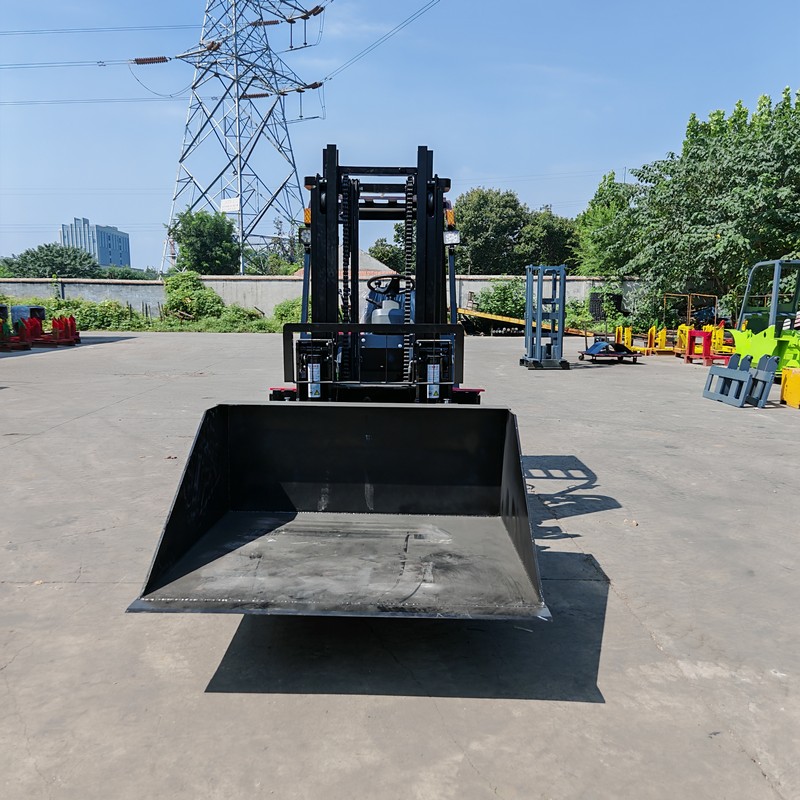
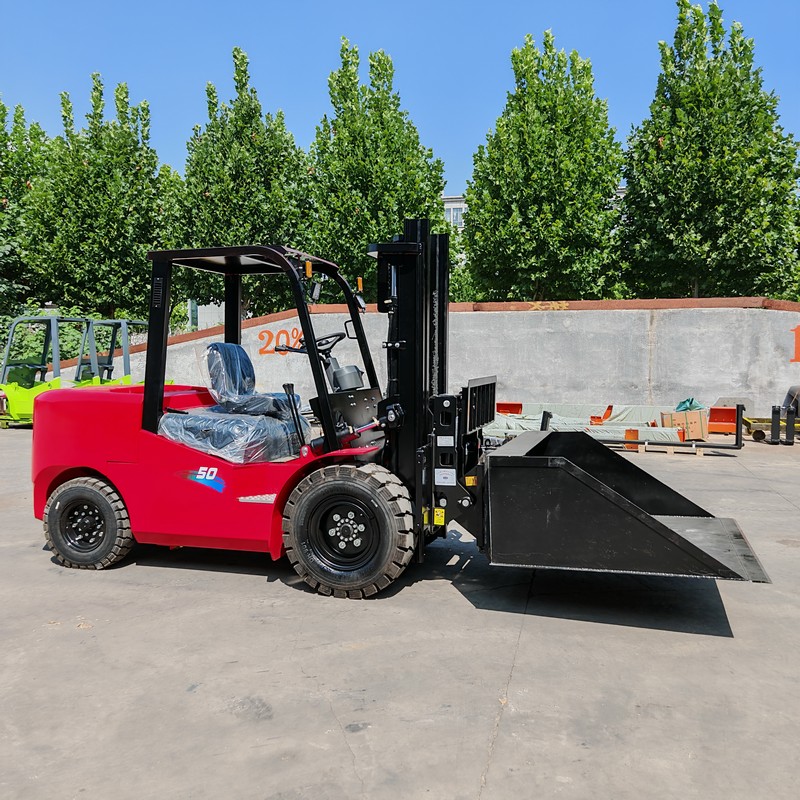
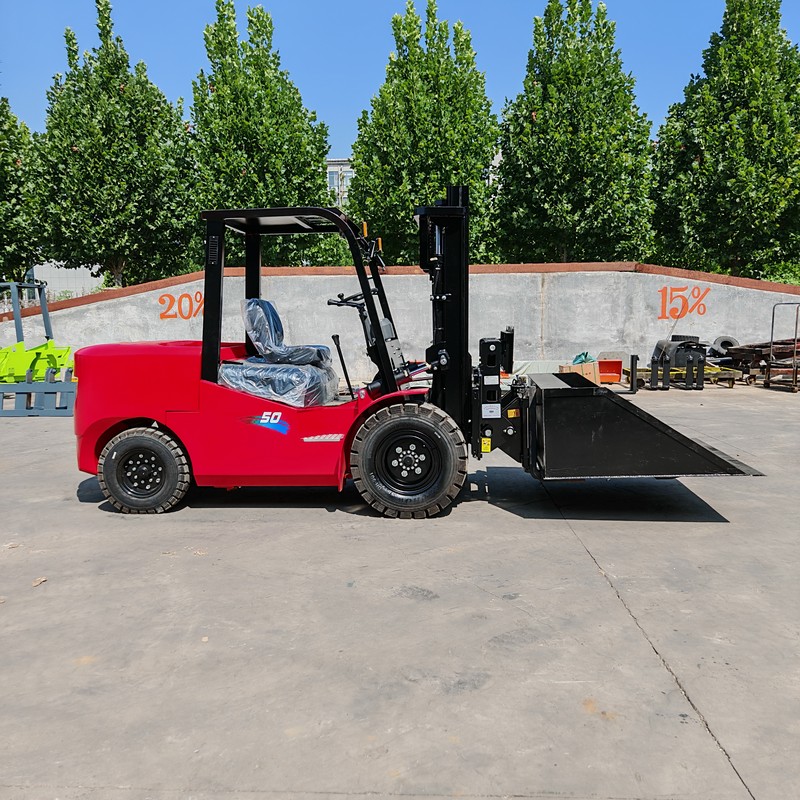
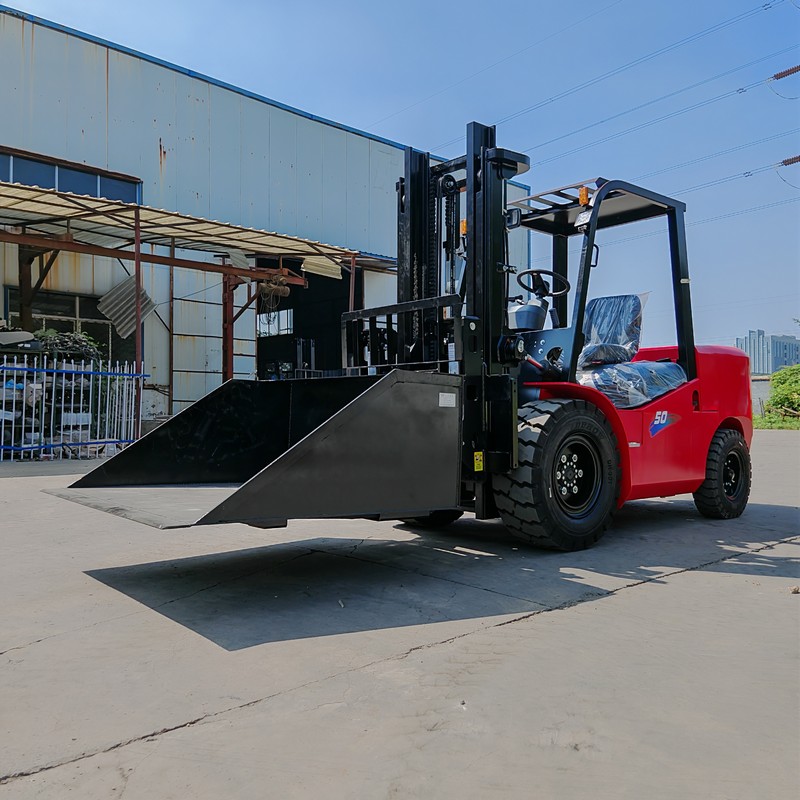
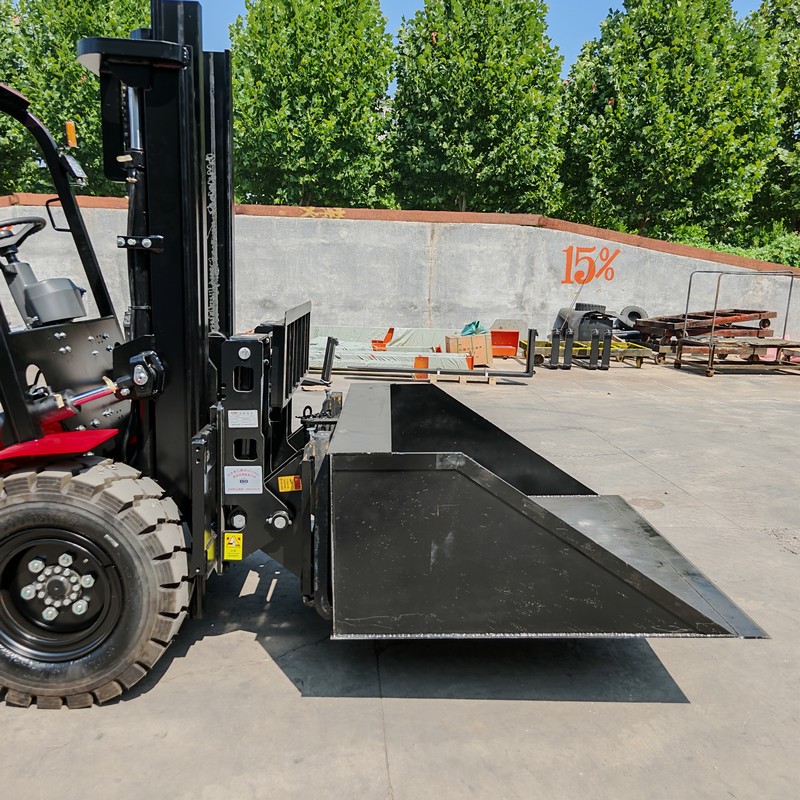
Tilt bucket
Loading bulk materials and quickly unloading them through the tilting action improves efficiency. Compared to manual labor or standard forks, the tilt bucket reduces material spillage, lowers labor intensity, and is suitable for scenarios requiring frequent loading and unloading of bulk materials.
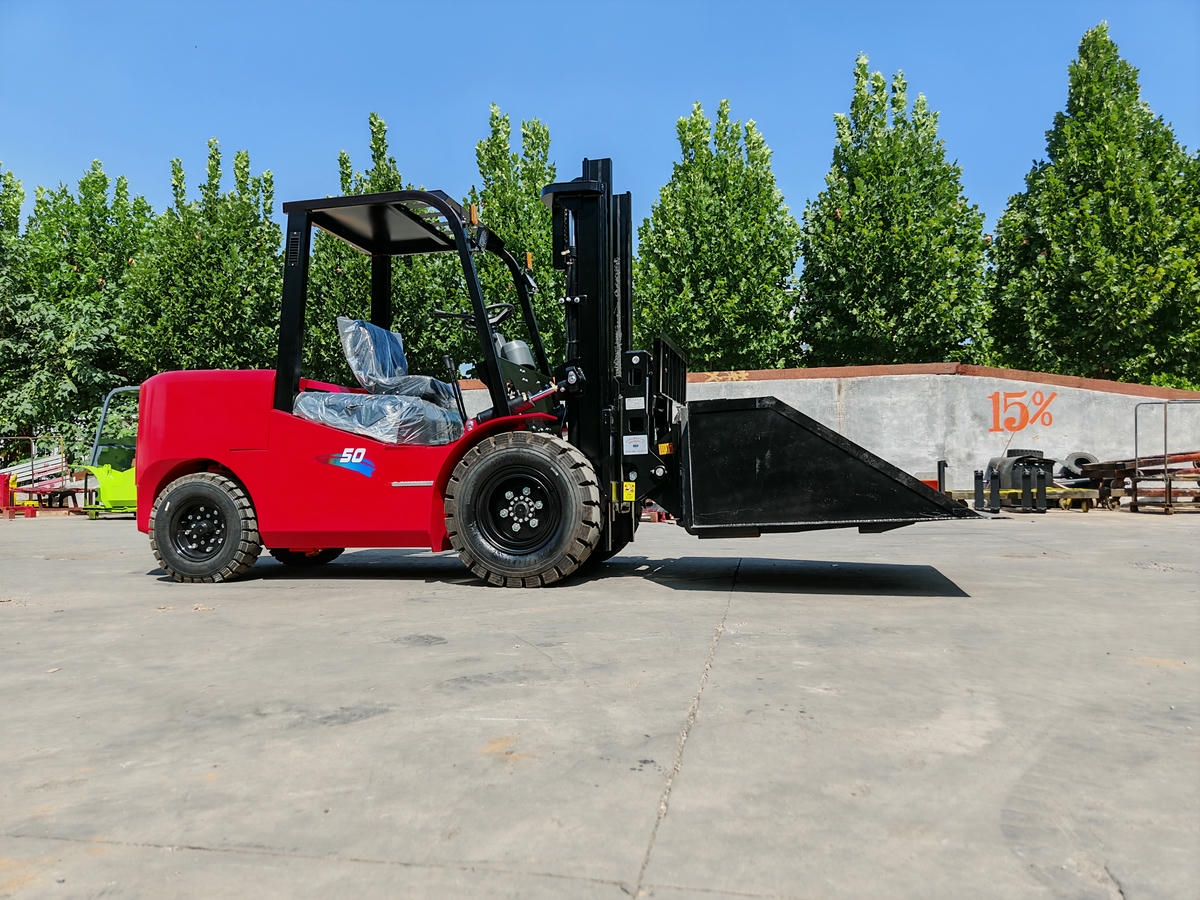
A forklift attachment tilt bucket is a specialized tool designed for forklifts to handle and transport bulk materials. By expanding the functions of forklifts, it enables efficient loading, transportation, and rapid unloading of bulk materials.
I. Basic Definition and Core Functions
As a type of forklift attachment, the tilt bucket is primarily used to replace traditional forks for handling loose, granular, or powdery materials. Its core advantage lies in significantly reducing manual loading/unloading costs and improving operational efficiency through the "tilt-unloading" action, while also minimizing material spillage losses.
II. Operational Process
Loading Phase: The forklift forks are inserted into the fork slots at the bottom of the tilt bucket. The forks are then lifted to raise the bucket off the ground, and the forklift moves to the material pile. The forks are lowered to allow the bucket to scoop into the material.
Transportation Phase: The bucket remains horizontal as the forklift travels to the unloading point.
Unloading Phase: Operate the control device to extend (or retract) the hydraulic cylinder, pushing the bucket body to tilt backward (or forward). The material slides out of the bucket opening due to gravity.
Reset Phase: Reverse the hydraulic system operation to retract (or extend) the cylinder, returning the bucket body to its horizontal position and completing one operational cycle.
III. Typical Application Scenarios
Tilt buckets are widely used in scenarios with frequent bulk material handling needs:
Construction Engineering: On-site transportation of sand, gravel, cement, earthwork, precast concrete blocks, etc.
Logistics & Warehousing: Loading/unloading of grain, feed, fertilizer, slag, and other materials at storage centers.
Mines/Quarries: Short-distance transportation and unloading of ore, crushed stone, and slag.
Ports/Wharves: Loading/unloading of bulk cargo such as coal and grains onto/from ships.
Agriculture: Field collection and transportation of straw, grain (e.g., corn, wheat), etc.
V. Key Selection Parameters and Precautions
When selecting a tilt bucket, it is essential to align with the forklift’s performance and operational requirements, focusing on the following parameters:
1. Matching Forklift Parameters
Rated Load: The total weight of the bucket (self-weight + maximum load) must be ≤ the forklift’s rated lifting capacity (a 10%~15% safety margin should be reserved).
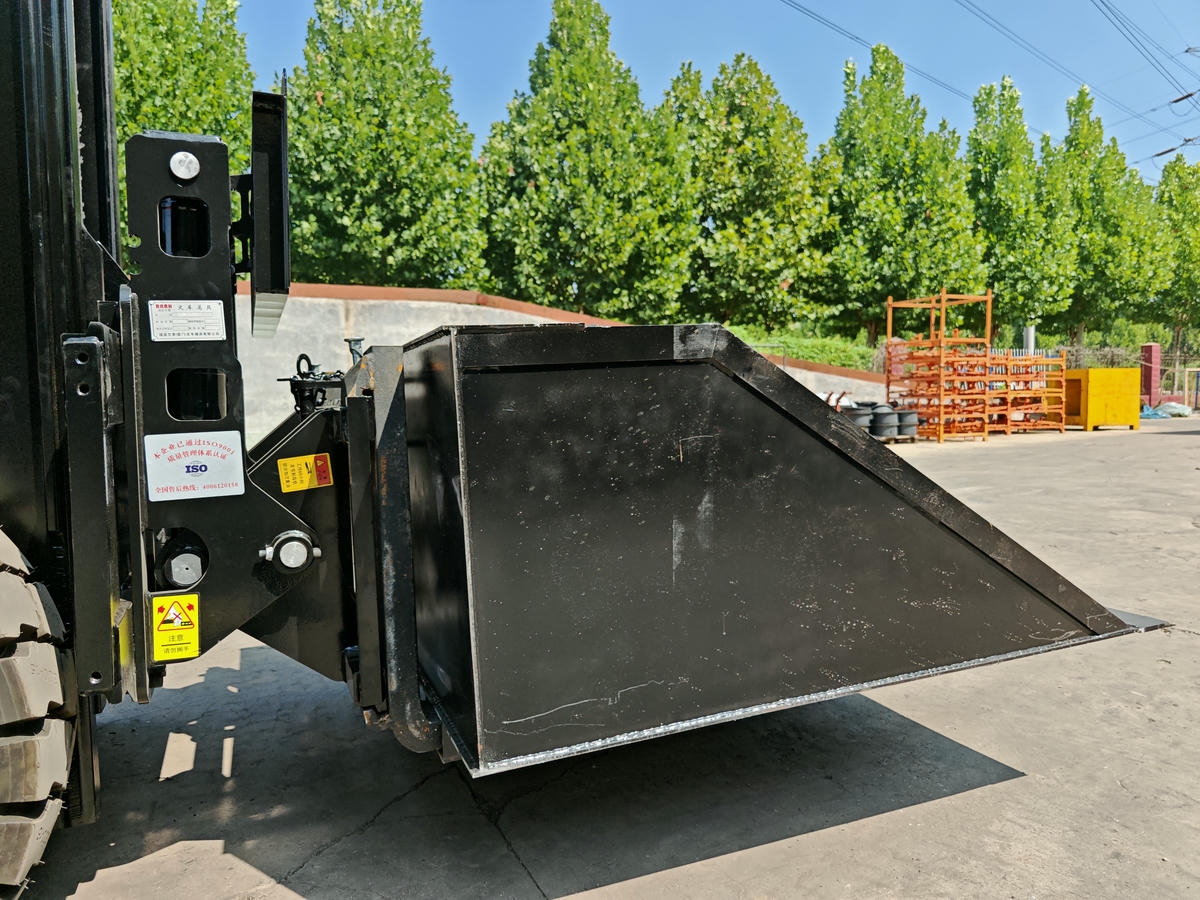
Installation Interface: Ensure compatibility between the bucket’s connection frame and the forklift’s fork carriage (e.g., pin diameter, mounting hole spacing).
Mast Height: The minimum height of the bucket (when unloaded) must meet the forklift’s minimum ground clearance to avoid ground collisions.
2. Performance Parameters
Tilt Angle: Select based on unloading requirements.
Material Thickness: Use steel plates with a thickness of ≥8mm for handling sharp materials, and ≥6mm for ordinary sand/gravel.
Hydraulic System Pressure: Must match the forklift’s hydraulic system pressure.
3. Safety and Durability
Locking Device: The bucket body must be locked when not in use to prevent accidental tilting.
Wear Protection: Removable wear-resistant plates (e.g., high-manganese steel) can be added to the bucket bottom and edges to extend service life.
The forklift attachment tilt bucket is a "productivity booster" for bulk material handling. With proper selection and maintenance, it can significantly enhance a forklift’s operational capabilities in loose material scenarios, reducing labor costs and material loss.